
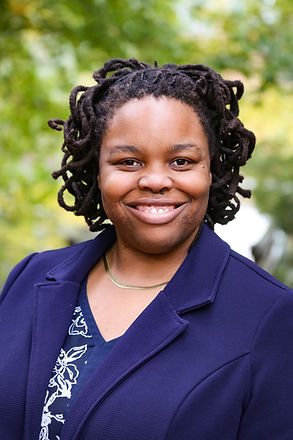
Tanesha Joi High
Preservationist | Photographer | Museum Professional
Preservation Philosophy
A life lived just outside the Historic Triangle of Williamsburg, Yorktown, and Jamestown; over three years employed as a cultural resource management archaeological filed technician; and nearly five years as an interpreter in historic house museums has created a personal philosophy on historic preservation. These life and professional experiences have shown me that documentation, stabilization, and restoration are just the start of the preservation process. A professional preservationist must be able to:
-
creatively educate and engage the public to encourage visitation, donation, and advocacy for historic sites
-
seek partnerships with environmental preservation organizations, who are often interested in saving the same landscapes
-
and educate property owners that their property has value more significant than monetary.
Without neighbors enlightened as to the significance of a historic site, the places we restore have not been saved. They can be demolished, fall into disrepair, and collapse from neglect. The next step in the process is to creatively interpret the architectural analysis, primary sources, archaeological reports, and scholarly research in ways that reach the average person where they are so that they can see what history is and therefore value it. Things that are valued are more likely to be saved.
In many K-12 schools accepted popular history is condensed into a set of irrelevant facts memorized for tests and quickly forgotten after. As a result, history loses its purpose, to offer insight on the present and inspiration for the future. The value of historic places is that visiting them is the most dynamic method of acquiring insight and inspiration from lessons learned from the triumphs, failures, and everyday lives of our ancestors. In my years as a historic interpreter, I have seen people develop an understanding of history and have emotional connections with the stories of the past on a deeper level in historic house museums than I have while giving tours of archaeological sites or talking about a potsherd. The average person cannot see the buildings and fences inferred by lines of postholes or a whole vessel in a sherd the way that professionals who study material culture can.
I am committed to the restoration of historic structures, but many times that does not complete the task of historic preservation.
Education of the public, adults, and children should be considered as much a part of the preservation process as the creation of HABS reports and National Register nominations. Adults will take our message to lawmakers so that zoning regulations are changed or enforced. They will stand up in city council meetings and oppose the development of historic landscapes. Children need to see that history is more than what their overworked teachers have time to give them. When I work with children, my goal is that I will inspire every child there to become an archivist, archaeologist, curator, osteologist, or preservationist. I know that is not reality, so I hope that out of all the children I have spoken to and will speak to that one or two will go on to pursue those careers as I have after visiting a historic house museum in kindergarten. The rest will grow into adults who support historic sites and museums through visitation, donation, and before their lawmakers; thereby saving the places we restore and completing the preservation process.